Thursday, December 29, 2011

Bluegrass Back When

According to Oxford Music Online, bluegrass is "part of the American country music tradition, with its heyday in the 1940s".  It goes on to say that bluegrass is characterized by the fiddle, banjo, mandolin, and a quick tempo too.  In modern times at least, the typical bluegrass band includes those instruments plus a guitar or two, a stand-up base, and sometimes a dobro.  "...The greatest exponent is generally thought to be Bill Monroe", with his song Blue Moon of Kentucky.  I don't believe I've heard the original version but I've definitely heard younger singers put their own spin on this age-old hit.

The roots of American bluegrass extend back to immigrants bringing their dance music and ballads from Great Britain starting in the 1600s up to the African American gospels and blues.  The banjo design even comes from a related instrument from Africa [2].  I'm assuming this would be the cora or kora from West African music after visiting the  Cora Connection website. As settlers spread throughout the colonies, they wrote songs about their new land and their day-to-day lives in the hills (mountain music) or on the farms (country music).  The invention of the phonograph in the 1900s supposedly "brought the music out of the rural Southern Mountains" and spread it throughout the nation [2]. Traditional country music was advanced through the works of people like the Carter family and the Monroe brothers and other duets.  When the Monroe brothers split up, Bill formed his band Bill Monroe and the Blue Grass Boys, named after his Bluegrass state of Kentucky.  They first performed in the Grand Ole Opry in 1939.  Their sound became more famous in the mid-40's.  After his banjo player and guitarist left the band at separate times, these two formed their own band.  The banjo player had a unique style with his 3-finger-picking style and one of their new band members actually incorporated the dobro.  This style of music started spreading through television in addition to the already established radio, plus traveling performances.  By the 1950s, people widely recognized the country/mountain music as bluegrass.  The first weekend-long bluegrass festival was held in Virginia in '65 and has been an American tradition since [2].  Kansas has a sizable one every year now in Winfield, and after all the shows are done for the night, every band and any music-playing onlookers get together and jam throughout the wee hours of the morning until everyone has tuckered out.

Another bluegrass icon is Ricky Skaggs from Kentucky, born in 1954.  I don't know how familiar he is to many of you but I think he is an important bluegrass figure.  At age 7 he appeared on stage of a concert produced by Bill Monroe himself.  Although he started out by learning the mandolin given to him from his father at age 5, he quickly picked up the guitar and fiddle by his mid teens.  His first album was released by '75 and in the 1980s, he was the youngest elected into the Country Music Hall of Fame.  He soon split his career between the Grand Ole Opry and an entirely separate bluegrass groove.  Some famous people he has worked with that you'll probably recognize are Johnny Cash and Dolly Parton [3].  Today he adopts many new bands to get their own records heard and helps spread his talent among younger groups.

In 1997, a year after Bill Monroe died, he was inducted into the Rock and Roll Hall of Fame for his music's influence on this country's popular music.  He was also already a member of the Bluegrass Music Hall of Honor and Country Music Hall of Fame[2].  Today our bluegrass music around the world shows hints of just about every other style of music you can possibly think of.  It is one giant mixture in itself of influences from everywhere combined into one resulting style that is constantly being advanced by new groups who mold bluegrass music to fit their distinctive style.  One example of these groups would be Cadillac Sky; a young and already broken-up band.  Although they no longer perform together, they are still performing musicians.  I saw them live and kept track of their albums; over the several years that they performed together, they helped advance not only bluegrass but even "newgrass", a progressive form of bluegrass that just goes back into the mixing pot with its heavy accents from other styles of music such as rock and roll.  It's all still the same instruments and the same basic style, but talking about the differences in newgrass would lead me in an entirely different direction and historical background that started just after the prominence of bluegrass in the mid-20th century.  I tend to be a fan of both the similar forms of music.


Listening Assignment #3

"Diggin' for Dex" by Count Basie and His Orchestra

I chose to expand my horizons a little on my listening assignment today and stray from the bluegrass sound.  I chose this piece piece for its liveliness; it makes me want to dance in my chair as I sit listening to it.  The form of this song actually confuses me a bit.  At first I thought it was AABA, and then it threw me for a loop.  But I'm going to say that in my opinion it is in AABAB form with several B sections tacked on the end, broken up by a solo and a key change.  Each section of the chorus is actually just 4 measures long.

The intro, a couple measures long, introduces to us a hopping piano sound and rhythm percussion.  In the first A section, the saxophones start in on the main melody and converse back and forth with the trumpets. There is possibly a little clarinet in the background being overpowered by the brass.  But at the very end of the second A section the clarinets speak out and continue smoothly into the bridge while the trumpets start to get sassy.  Here, I think I hear a bari sax sound mixed in with trombones on the off-beats of the trumpets.  Then another A section repeats followed quickly by a bridge once more, breaking the pattern.  In the following two A sections,  the saxophone takes the melody again but with more improvisation and the piano accompaniment as the trumpets fade somewhat into the background.  Here a single trumpet lazily pulls through the next bridge  with just the company of the piano and rhythm percussion.  The saxophone soon takes over the melody again in another A section then the brass section blares two bridge sections.  After this point, the piano takes a solo and this is where I can actually hear the upright base and a guitar in the background strumming to the rhythm alongside the drummer on the cymbals.  Tired with the solo after only 4 measures, the piano steps down a few notes to signal another bridge section and the entire band comes back in.  There is a quick, 2-measure interruption where the trumpets and clarinets talk each other into a key change.  The trumpet aims high and a new exciting bridge forms from the whole band, only to be repeated again.  A single saxophone takes a solo; the trumpet steals it away; once again it is stolen away but this time by the drummer actually using his whole set.  But no time for dilly-dallying; the bari sax steals the show on an almost forgotten about A section with trumpet licks in each gap and then there is finally a full-out drum solo with a short vamp ending in a brass shout.

Obviously there is a lot of talent in this band.  Each musician had his or her own characteristics or "bag of tricks" they brought to the table, like Alfred said in class today.  I agree that it is certainly dancing music, and I'm guessing that Count Basie and His Orchestra could have easily extended this song often with more solos and bridges until they got tired of it.

Wednesday, December 28, 2011

Listening Assignment #2 - "Paper Airplane" by Alison Krauss & Union Station

This song gives everyone a peak at the dobro in use, also.  This song's form is A, A, B, A but of course Alison Krauss doesn't come without complications.  The song has an intro and an interlude with odd counts inserted/taken out.  It starts with an intro of 4 and a half measures of guitar and steel guitar; although there is no visual of a steel guitar in the video I'm pretty sure I hear one in the background. The first A section adds in Alison's voice and the steel guitar disappears.  As she sings into the second A section the dobro comes in here and there, just filling in the gaps and the steel guitar is barely haunting her in the background.  The bridge gets louder all together and the mandolin tip-toes in with the base.  As soon as the bridge is over, the mandolin takes over and we first hear it's full sound for a few measures, the solo then being taken over by the talented Jerry Douglas on the dobro.  At this point, Alison returns to sing the second verse before the next bridge, which she sings louder once again.  A short dobro interlude of only 3 and a half measures interferes before one more A section at the end.  This song ends abruptly without any sort of vamp to keep us in the mood; it just ends on a cliffhanger with a bitter taste left in our mouths.  But they did this on purpose; even though I haven't listened to the whole lyrics, the abrupt ending made me notice that the very last lyrics are "Our love will die, I know".  It is a skillful way to keep us thinking about the song and wanting to know more.

In this song I find it interesting that even though there is a standup base, it doesn't even come in until the bridge and until that point the guitar has kept the rhythm all by itself.  The happiest sound in this song comes from the mandolin while the steel guitar haunts and the dobro moans.  I can't say that this song fits the 32-bar popular song form because when we even disregard the odd counts in the intro and interlude, there is still 9 measures to each section of the chorus.


[1] Jerry Douglas playing his dobro with Zac Brown band.

Since not many people actually get to know what a dobro is because it is mostly confined to bluegrass and is replaced by the steel guitar on country radio, I thought I would do a little bit of research on the instrument.  Two men, the Dopyera brothers from the Slovak Republic, invented the dobro in the 1920s in the United States.  The name of the dobro actually comes from the beginning letters of their last name and the word brothers (DOpyera BROthers).  The first dobro in a band format was used by the Foggy Mountain Boys. This was a couple decades before the name "bluegrass" music came around in the 1950s [Academy of Bluegrass].  Dobro also meant "good" in Slavonic languages. The dobro is actually a resonator guitar, or a guitar built with several resonating discs to provide its unique moaning sound. It was orginally built because of the demand for guitars that played at a louder volume, back before we had amplifiers. The electric guitar took over this market after World War II. The dobro at first was used in country blues and hillbilly music.  Like I said, its mainly heard only in bluegrass now, but apparently is also used by some rock and jazz musicians [Oxford Music Online].  I actually have a friend that plays the dobro and he is part of The Franz Family band.  I would put him up there with Jerry Douglas as he can really cause goosebumps with his music and take the breath from an entire audience.

Tuesday, December 27, 2011

Chicago Picasso

The unnamed Chicago monument by Picasso does not resemble one specific thing to me.  I see a few different animal characteristics when I look from different angles.

I see the curiosity of a monkey when I look at the eyes, nose, and cables resembling the lines on a monkey's face.  The curious eyes are penetrating when I view of it this way.  That is as long as I am looking close up from the front.  

When I look at a picture taken from the front but farther away, my focus goes down to the bottom and it reminds me of the patience of a dog sitting, waiting for its master's next command.  Then when I look up I can even see the playful and floppy ears of a dog.

Yet from a close-up 45 degree profile, I see a majestic bird perched with its wings open and ready for flight.  It shows strength and gentleness.

At a very particular angle, a view of the sculpture could look like a woman's face, but it's only the tiniest portion of the monument that does reveal a woman's nose and mouth.  This is only seen if you ignore the rest of the statue in its entirety.  If Picasso really modeled this after a woman, she must not have appeared that attractive to him if he only showed the lips of a woman's face and the tip of her nose.

The size and weight of the statue don't register as a part of the picture to me; it seems more to be sized to the city of Chicago so that it is large enough for people to notice.  Picasso designed it for the people of Chicago to assemble and to share so it had to be large. 60 tons doesn't make a curvy and womanly sculpture seem graceful, and it doesn't add to the views that I pointed out, so that is the only explanation I can come up with for the massive amounts of steel.

I'm really not a fan of Picasso or even abstract art in general, so this monument doesn't really strike my fancy. But it definitely gives people something to wonder about while walking the streets of Chicago.

Listening Assignment #1 - Transformation of "Whipping Post"

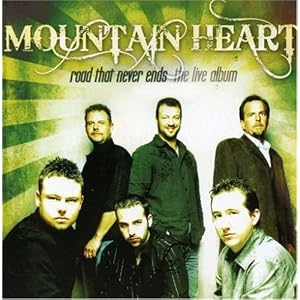
(Photo from BluegrassJournal.com)

        I heard Mountain Heart live in my family’s restaurant a few years ago.  I even got to check out their tour bus, actually.  It was back when Adam Steffey from Alison Krauss and Union Station was touring with them.  They performed a song by the Allman Brothers form 1969, called “Whipping Post”.   The YouTube video below is the clearest version, slightly differing from my CD where Adam Steffey plays the mandolin and Josh Schilling plays the piano rather than one of the guitars.  There is also a link in the paragraph below to a YouTube video that is more accurate to what I saw performed live.  That night was memorable for me.  I remember Josh Schilling watching our Nickelodeon as it played in our restaurant; when the piano finished its song from someone inserting a quarter, he leaned over it and started mimicking the ragtime melody previously played.  It should have taken him 13 hands to reproduce the same sound, but somehow he managed to closely replicate the sound with just his own two hands. 
        The original version of this song by the Allman Brothers is considered kind of a blues rock song, whereas this Mountain Heart is a bluegrass band performing the same song with an acoustic sound.  This song actually has an intro with 11/8 signature time.  I just thought it had ¾ meter for 3 measures and then a measure of 2/4 time.  I did rely on Wikipedia to help me figure that out.  Most of the rest of the song is in 6/8, although there is reference back to the intro with 11/8 time.  There is a string base introduction at the beginning, building suspense with each measure as more instruments are added.  The form of the popular 32-bar chorus is A, A, B, A; the A sections have strong, driving music emphasizing the first beat of every measure and the bridge slows down and climaxes the suspenseful feeling when the singer is almost shouting and falls into a melancholy feel by the end of the bridge.  Then it’s back to a quick intro before repeating the form and adding an instrumental tag at the end that could go on forever.  The intro/A section after the first bridge section is entirely instrumental, starting with the violin and then switching to the guitar.  The next ‘A’ is back to voice.  Other parts to this song other than voice, violin, and guitar include banjo, mandolin, and also string base which drives the rhythm.  This blues song does follow the A, A, B lyric pattern for the bridge.  
        The Allman Brothers sound like they include electric guitars and electric base guitars, an organ, drums, and voice.  The pattern is pretty much identical except for that it never slows down from its fast pace; you just choose which video to watch to see how long the Allman Brothers can keep running with the tag for a different length on the song.  Before the second bridge, the guitar also screams a high pitched note quite a bit.

Mountain Heart - "Whipping Post" YouTube Video:

Like I said earlier, the video with lesser sound quality has major piano parts and solos, of which the link for the YouTube video is:  http://www.youtube.com/watch?v=u6HLRN67TFk&feature=results_main&playnext=1&list=PL5E834A1FEA0C48E6

    A link for the Allman Brothers version is here: